
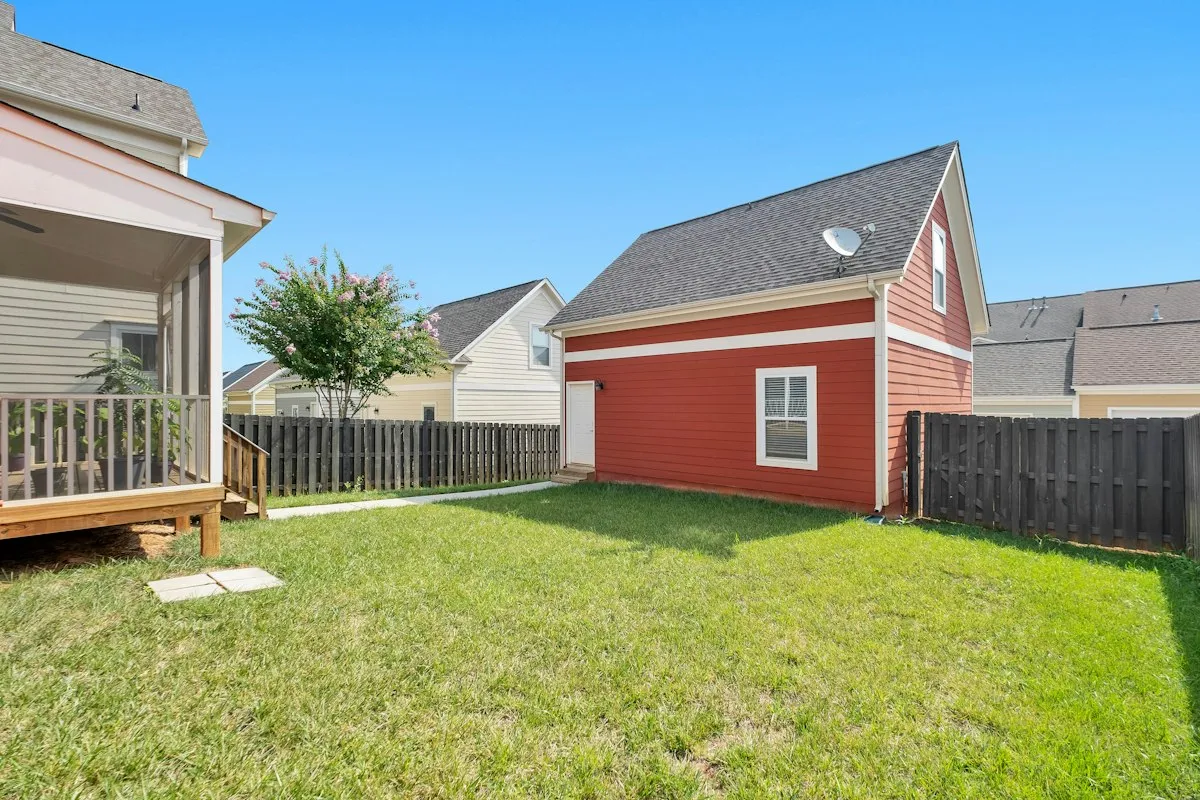
What a County-Approved ADU Does to Your Property Taxes and Homeowners Insurance in Riverbank, CA
Most of the ADU questions we field in Riverbank are about setbacks, square footage, and how fast the county can turn around a permit. Almost nobody asks what happens to their tax bill and their insurance policy the day after that Certificate of Occupancy gets signed — and that's the part that catches homeowners off guard six months later.
A county-approved ADU doesn't just change your lot. It changes two pieces of paperwork you probably haven't touched in years: your Stanislaus County property tax assessment and your homeowners insurance policy. Here's what actually happens to both, and what to do about it before the bills show up.
Yes, Your ADU Triggers a Property Tax Reassessment — But Not the Way Most Owners Assume
The most common fear we hear is "my whole property is going to get reassessed at today's market value." That's not how it works. Under Proposition 13, building a county-approved ADU counts as "new construction," which triggers a reassessment — but only of the new construction itself. The county assessor adds the appraised value of the ADU to your existing assessed value; the value of your original home and the land underneath it stays locked in at its current Prop 13 basis. You're not losing your old assessment, you're adding a new line item next to it.
California also carved out specific relief for smaller units. Under state law (Revenue and Taxation Code Section 74.6.1, enacted through SB 13), an ADU under 750 square feet is fully exempt from the supplemental property tax reassessment that would otherwise apply to new construction. ADUs between 750 and 850 square feet get a partial exemption. Above that, the added value is assessed in full. Riverbank's typical detached ADU plans run anywhere from a 400-square-foot studio to an 1,100-square-foot two-bedroom unit, so where your plan lands on that scale matters more to your tax bill than almost anything else in the design.
How the County Actually Calculates the Added Value
The Stanislaus County Assessor's Office doesn't guess at market comps for your new ADU the way a Zillow estimate would. They typically work from your building permit valuation — the construction cost figure submitted with your permit application — to set the new assessed value, then apply the standard 2% annual Prop 13 cap to that new portion going forward, same as your primary home. That's one more reason to make sure your permit valuation reflects what you actually built, not a placeholder number a contractor typed in to move the application along. An inflated permit valuation can mean an inflated supplemental tax bill with no upside.
Expect two things in your mailbox after final inspection: a supplemental tax bill covering the partial year between completion and the next regular assessment cycle, and a notice of your new assessed value for the ADU going forward. Neither is optional, and neither is a sign something went wrong — it's just the system catching up to the square footage the county already approved.
Your Homeowners Policy Doesn't Know the ADU Exists Yet
Here's the part that genuinely does surprise people: getting county approval and finishing construction does nothing to your insurance automatically. Your homeowners policy was written against your home as it existed when you last renewed. A new detached structure — even one the county has fully signed off on — isn't covered until you call your carrier and add it.
At minimum, that call needs to happen before the ADU is occupied, not after. A standard homeowners policy typically needs an endorsement to extend dwelling coverage to a detached structure of this size and value; the blanket "other structures" allowance most policies include for sheds and detached garages is usually far too low to rebuild a livable ADU. If a pipe bursts or a kitchen fire starts in the unit and your carrier finds out it was built without being added to the policy, you're negotiating a claim on a structure they didn't know existed.
Renting It Out Changes the Insurance Conversation Again
If the plan is to rent the ADU — the most common reason Riverbank owners build one — a standard homeowners endorsement usually isn't enough on its own. Carriers generally expect a landlord or rental-dwelling policy, or a specific rider, once there's a paying tenant on the property. That coverage typically adds liability protection for tenant injuries, loss-of-rent coverage if the unit becomes uninhabitable after a covered loss, and sometimes requires proof that the unit was built to code with a final county inspection on file. Keep your permit card, final inspection sign-off, and Certificate of Occupancy together in one folder — it's the first thing an adjuster or an underwriter will ask for.
A Short Checklist for After Your ADU Passes Final Inspection
- Confirm your building permit's stated construction valuation is accurate — it's what the county will likely use to set your new assessed value.
- Expect a supplemental property tax bill and a revised assessment notice from Stanislaus County; budget for the ongoing 2% annual increase on the new portion.
- Check your ADU's square footage against the SB 13 exemption thresholds (750 sq ft full exemption, 750-850 sq ft partial) before assuming you owe nothing.
- Call your insurance carrier before anyone moves in — don't wait for renewal.
- If you're renting the unit, ask specifically about a landlord or rental-dwelling policy, not just a homeowners endorsement.
- Keep your permit, final inspection, and Certificate of Occupancy on file — both the assessor and your insurer will eventually ask for them.
None of this should scare you off building. It should just be part of the budget conversation from day one, the same way we talk through foundation type or finish level. If you're planning a county-approved ADU in Riverbank and want the real numbers — construction cost, likely tax impact, and what your carrier is going to ask for — get in touch with our team or start with our ADU page for the build side of the process.